While passing through Chicago’s Hyde Park neighbourhood in July of 2025, we unexpectedly found ourselves in front of Frank Lloyd Wright’s famous Robie House. We hadn’t planned a visit, or to scan, but because we travel with a Leica BLK2GO for situations exactly like this, we decided to challenge ourselves. How well would the BLK2GO do in an unplanned, time-constrained scan of a historic site?
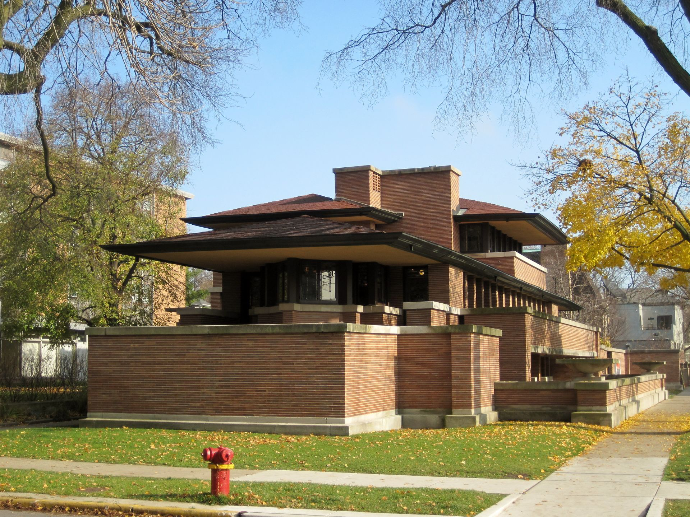
We had less than ten minutes to spare on the Robie House, and no prep or equipment with us besides the BLK2GO. Even under rushed conditions, the BLK2GO surprised us with how clean, complete, and colour-rich the resulting dataset turned out. So, here’s a quick look at our BLK2GO field workflow for this capture, the process for registering and working with the data, and some tips for how to replicate our success with your own reality capture projects.
A Brief History of Frank Lloyd Wright’s Robie House
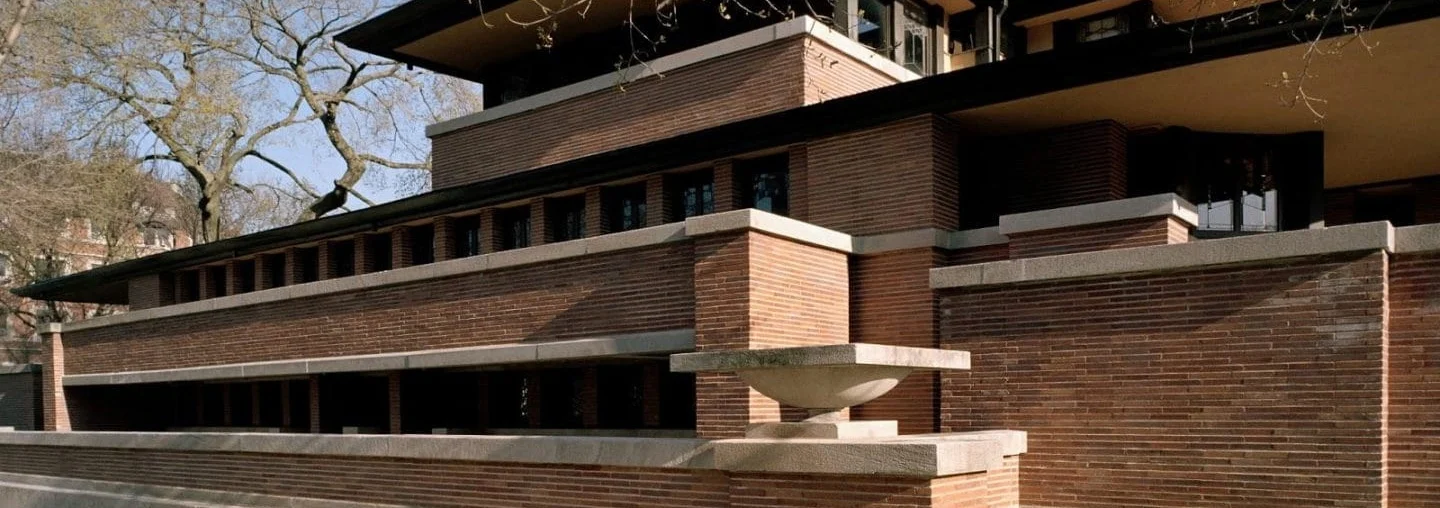
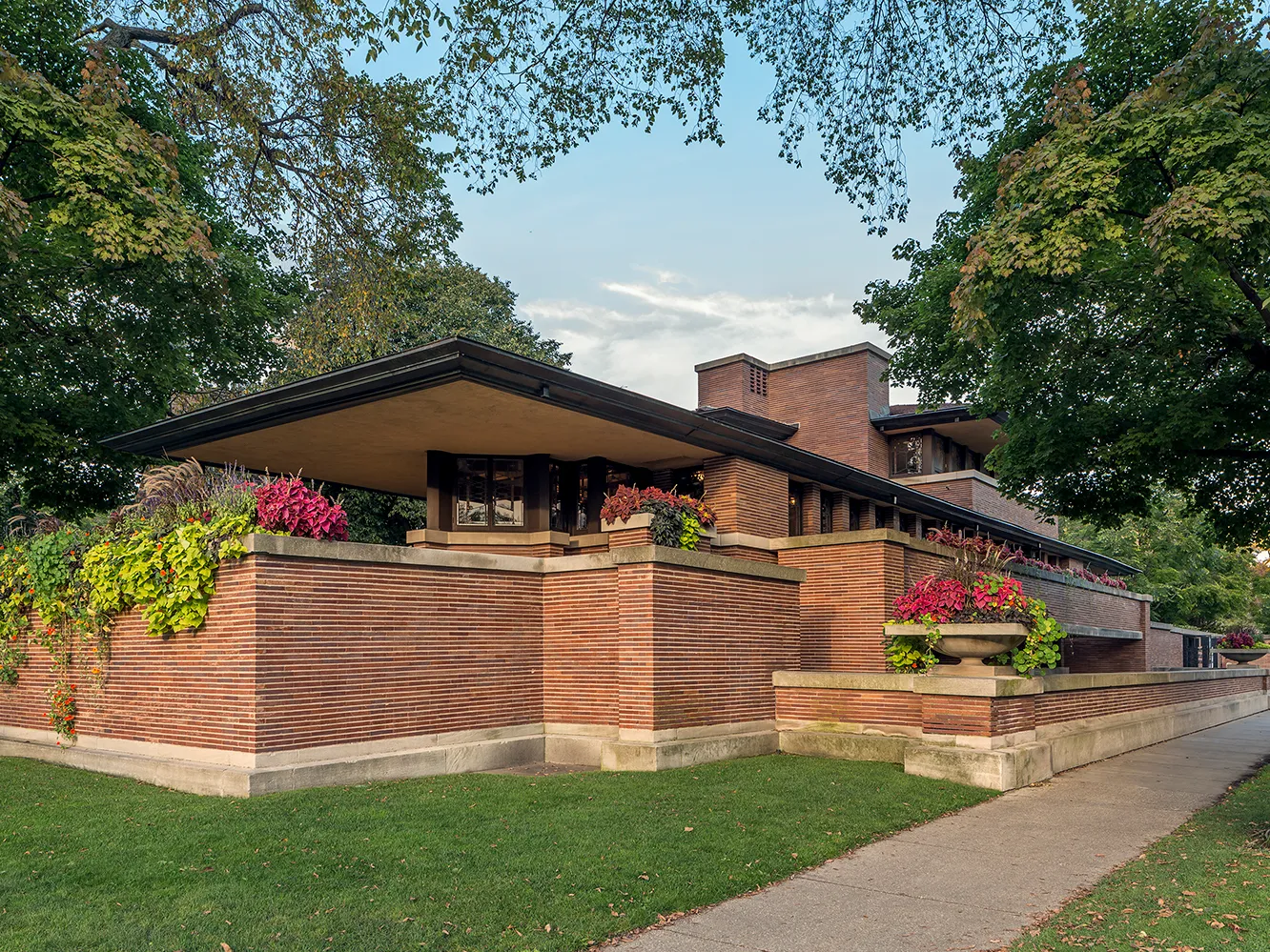
The Robie House was designed by Frank Lloyd Wright between 1908 and 1910, and it is frequently cited as one of his masterpieces of the Prairie style. Flat lines, strong horizontals, overhanging eaves, open living space and integration with the landscape.
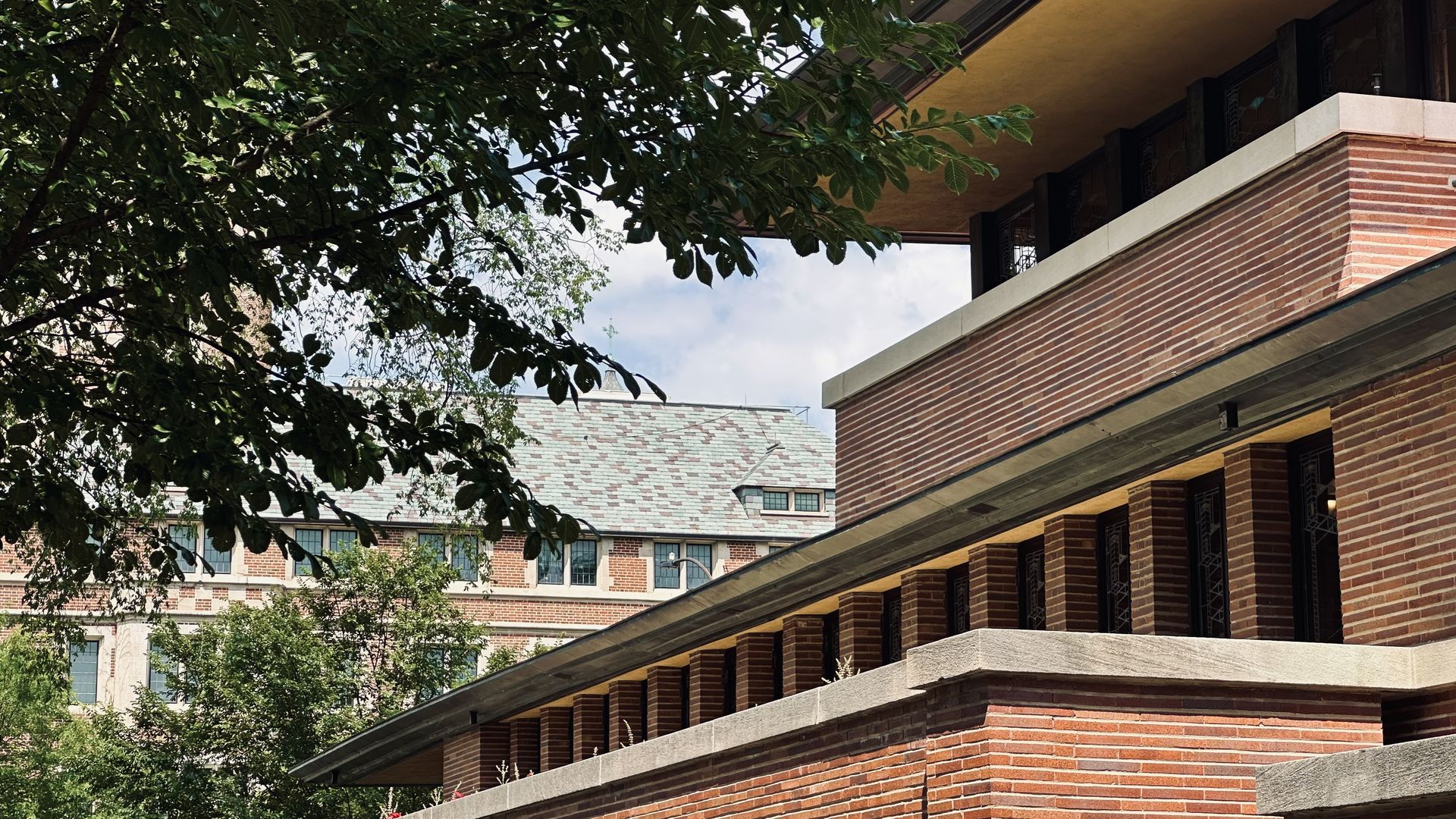
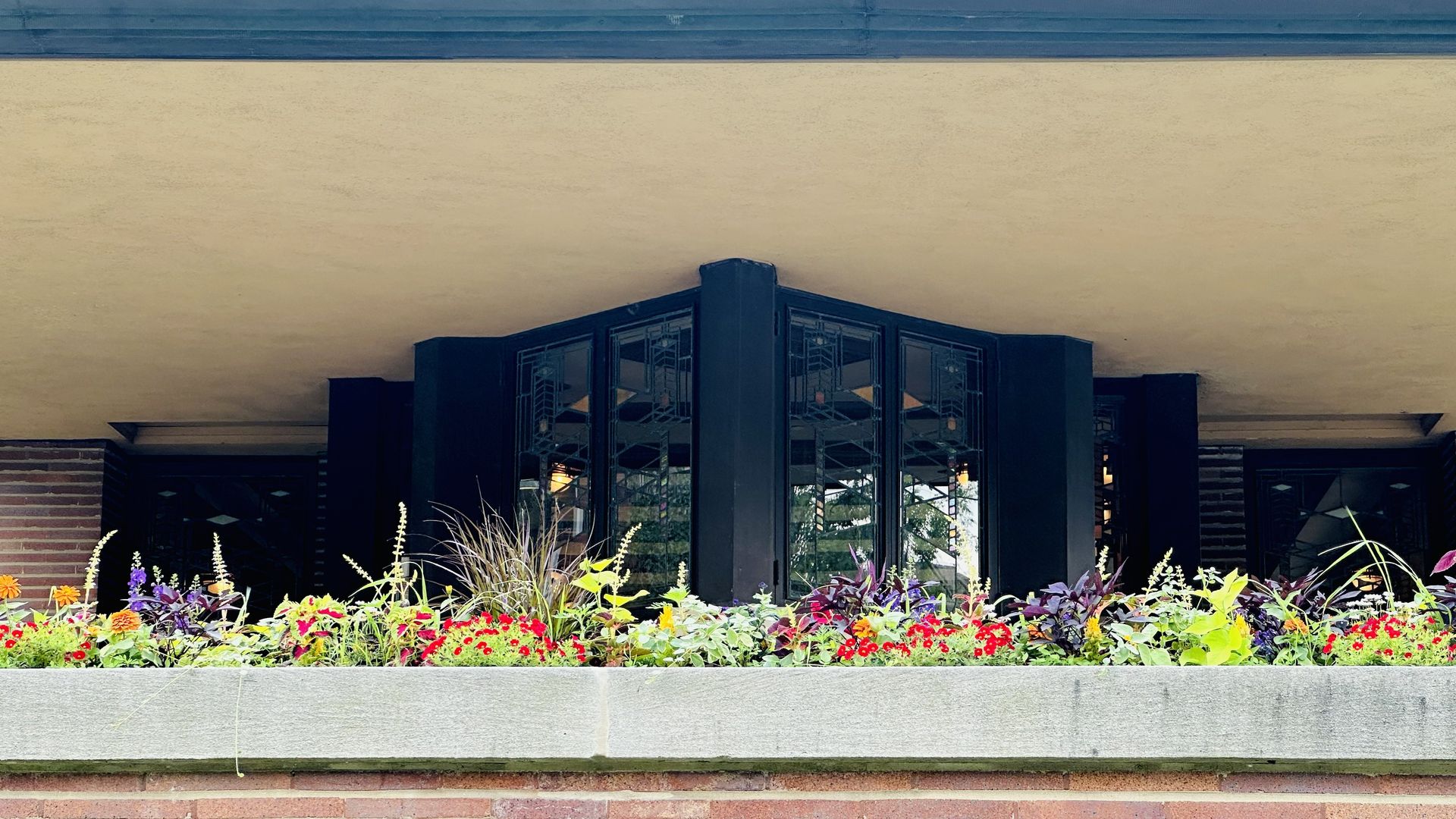
Wright designed the Robie House for Frederick C. Robie, a young entrepreneur who wanted a family home that embraced modern living. Rather than relying on traditional Victorian layouts, Wright pushed toward openness: long bands of art-glass windows, flowing sightlines between rooms, and a structural system that allowed walls to seemingly dissolve into space and light. The house’s dramatic roofs were engineering marvels for their time, giving the impression that the building is suspended horizontally over the landscape.
Beyond its architectural innovation, the Robie House became a cultural milestone that reshaped American residential design. Its emphasis on harmony with nature, unbroken horizontal geometry, and custom designed furnishings established a new architectural vocabulary that influenced generations of designers. Today, many scholars consider it the purest expression of Wright’s Prairie School philosophy, a turning point where American architecture began confidently defining its own identity.
Located near the heart of Chicago, the house is now a house museum and designated landmark.
Best scanning practices using the Leica BLK2GO
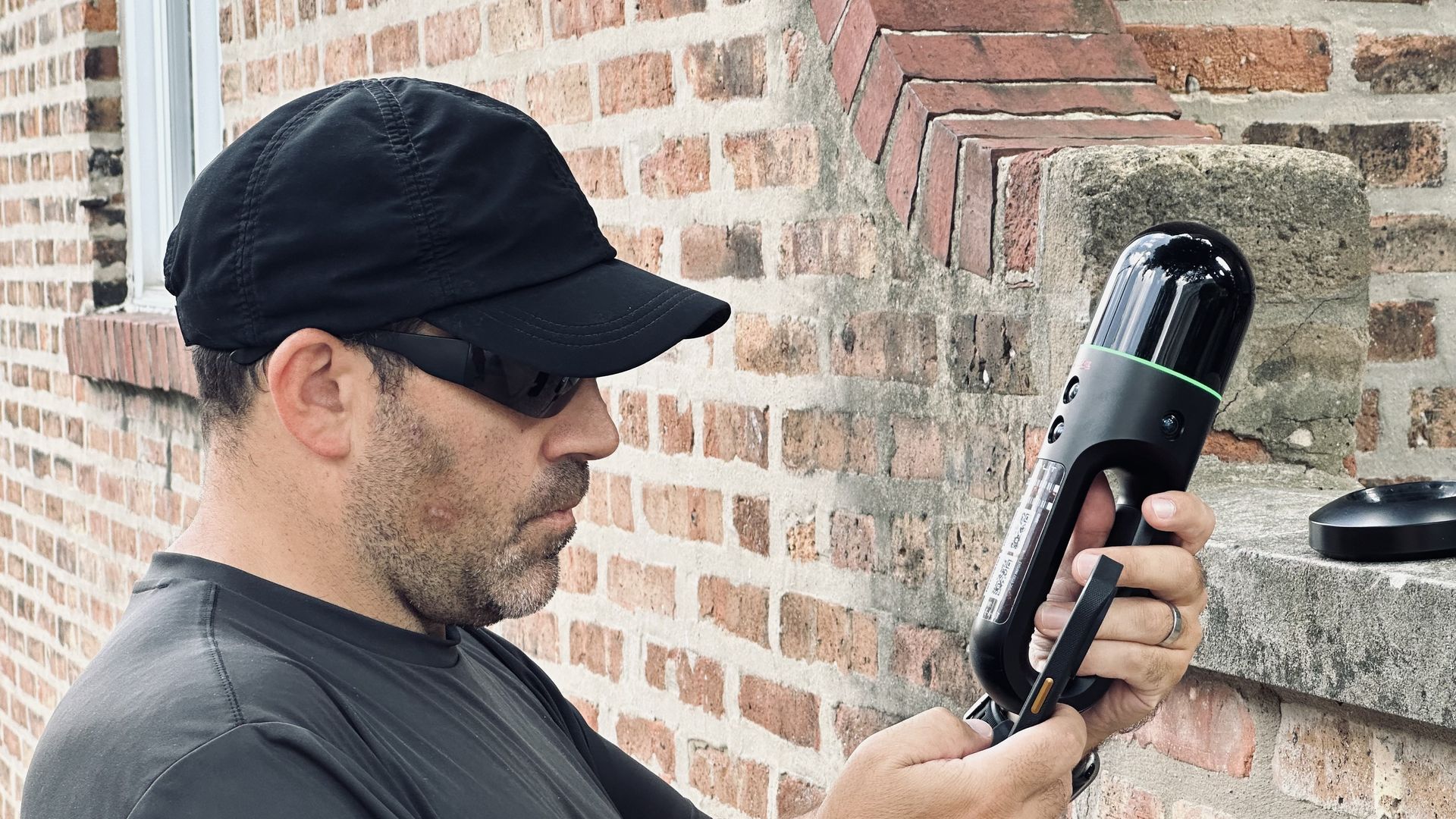
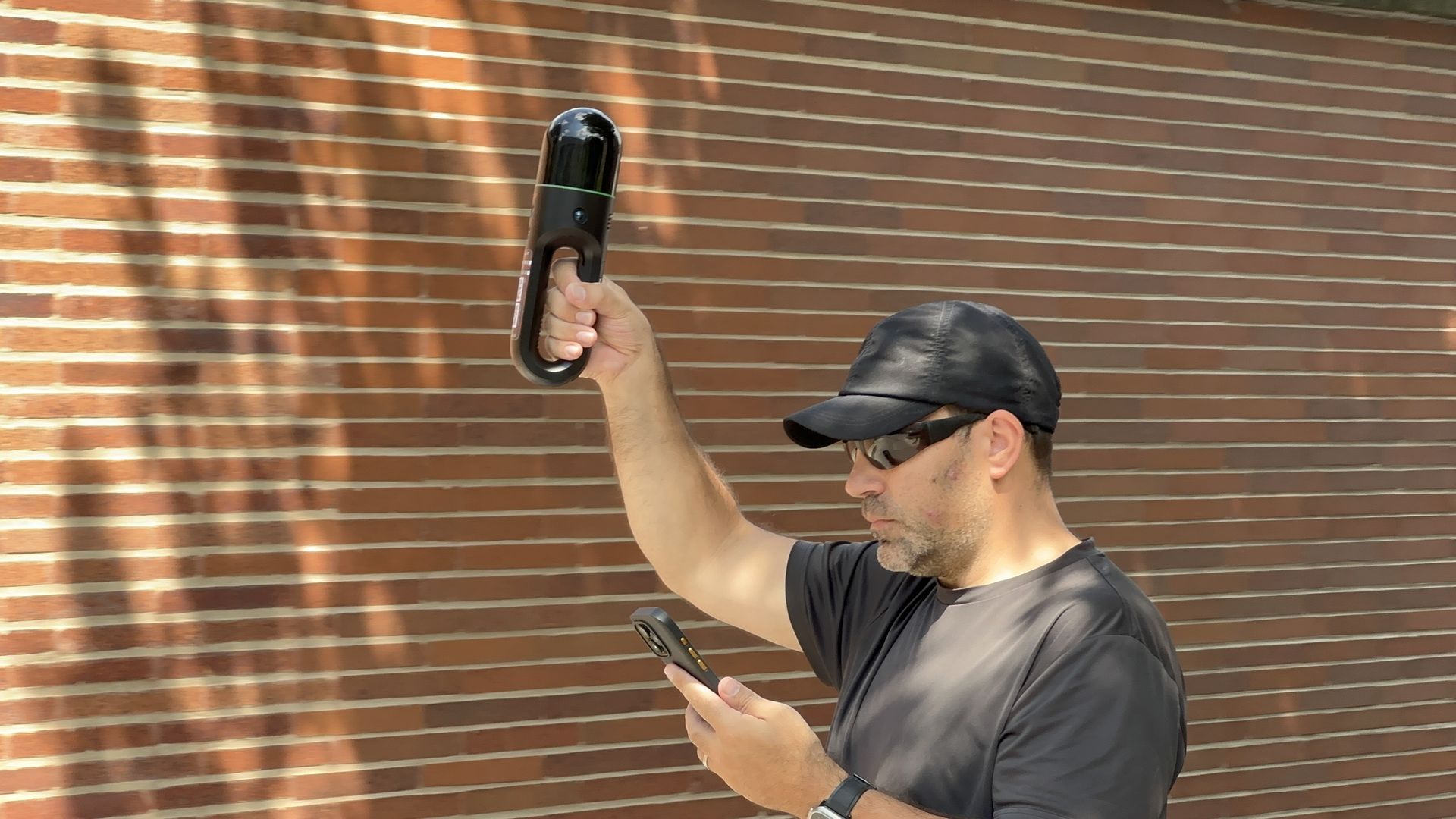
We didn’t arrive with scanners or a plan, but the BLK2GO lives in our kit for exactly these moments. Instead of setting up a tripod scanner, we simply powered it on, hit “record,” and walked a loop around the house at a steady pace.
For projects with small interior spaces or narrow passageways, the BLK2GO is the obvious choice. It’s a scanner that requires no setup– it’s mobile and free. All you have to do is walk and capture. Despite its mobility, the BLK2GO retains reliable positioning even when moving quickly, and integrated imagery allows you to capture colour, materials, shadows, and textures automatically.
Interested in the BLK2GO?
You can learn more about the scanner we used on it's dedicated page.
However, when working spontaneously like this there are still a few things to consider:
- Steady pacing helps. Even during a rushed scan, keeping a consistent walking speed reduces motion artifacts.
- Pause at architectural corners. Brief slowdowns at corners give the scanner strong geometry to lock onto.
- Mind transitions. Moving under deep eaves or architectural projections benefits from a slow sweep to maintain alignment.
- Let imagery run. One pass captures both geometry and visual context, which is extremely helpful for iconic architecture.
Workflow for registering and cleaning the data
Once the BLK2GO survey is complete, the data workflow begins with importing. The raw dataset is first downloaded from the device using Leica’s BLK Data Manager or imported directly into Cyclone REGISTER 360 PLUS, complete with accompanying imagery. Once the data is imported into Cyclone REGISTER 360 PLUS, the individual scan walks are registered and aligned to ensure spatial accuracy. During this stage, obvious noise and misalignments are cleaned up to produce a coherent point cloud.
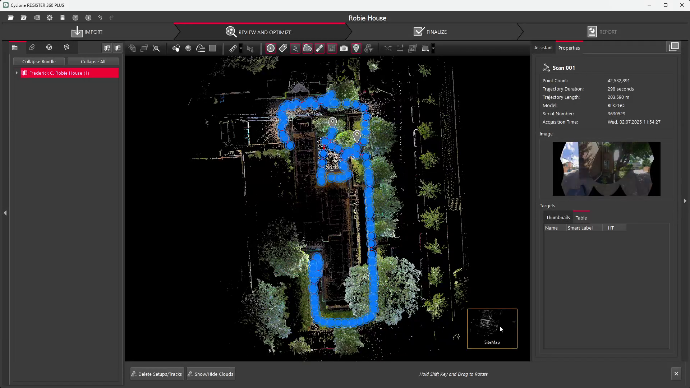
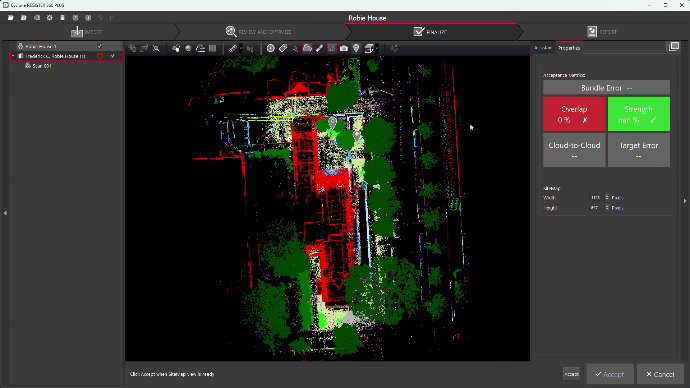
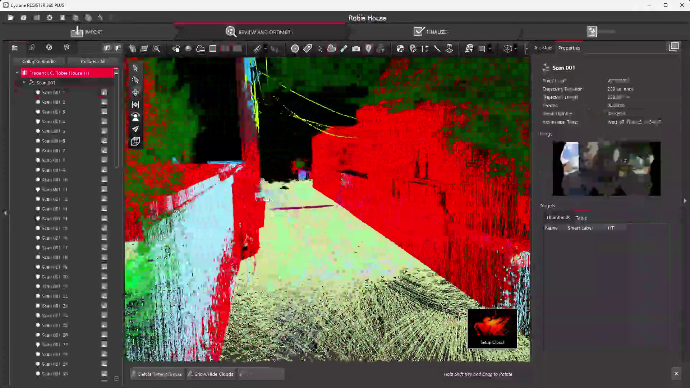
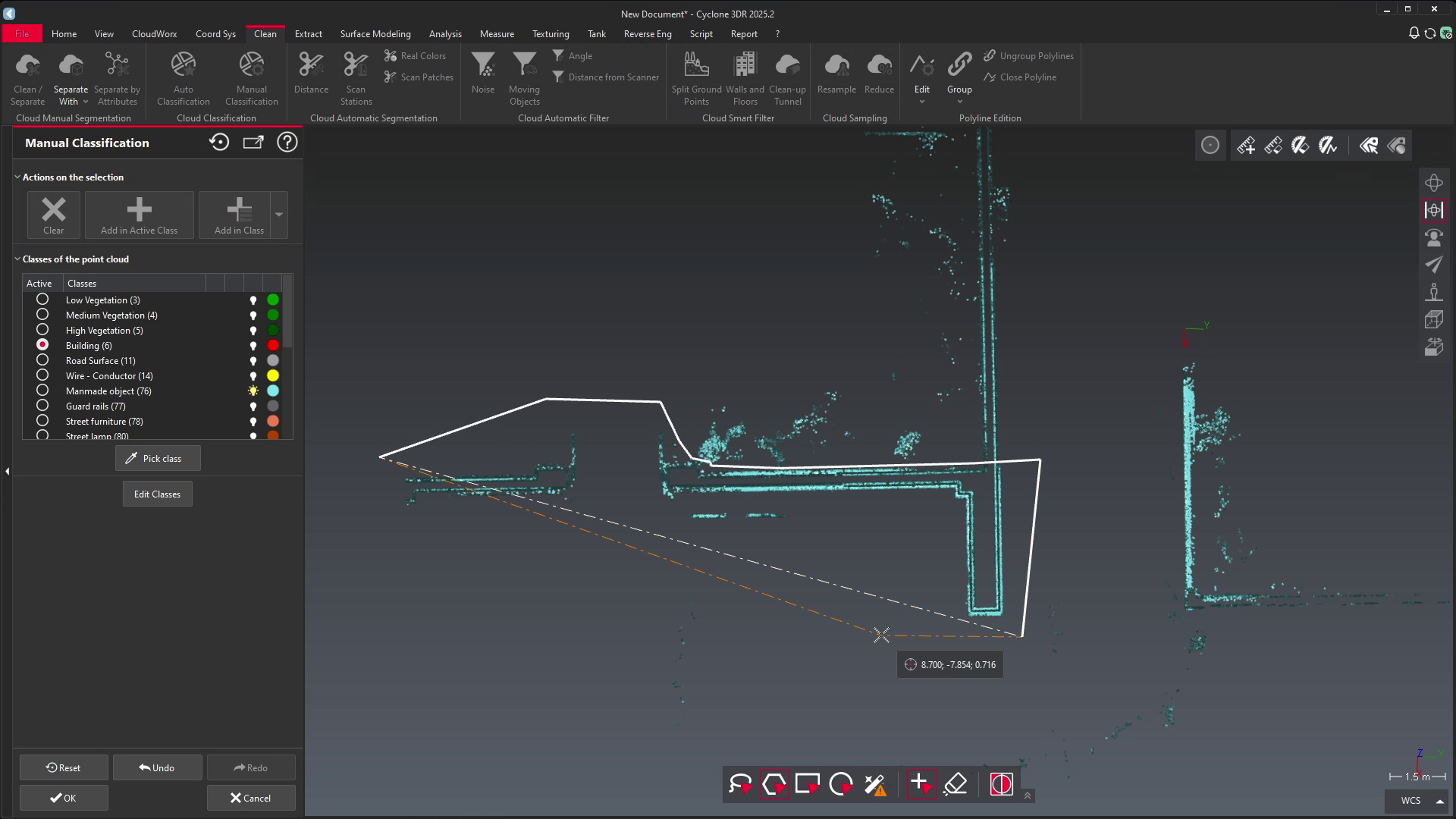
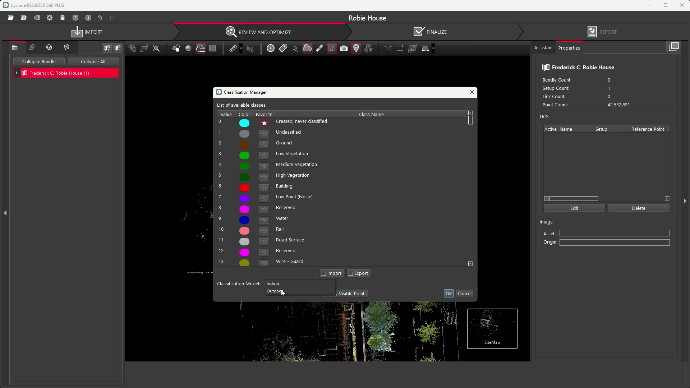
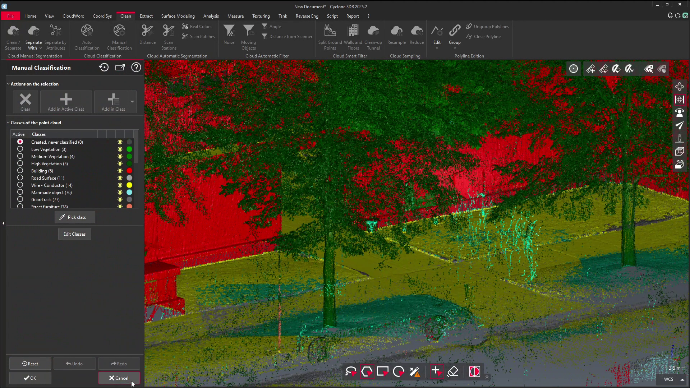
After registration, dynamic or transient elements such as moving people, vehicles, or temporary equipment are filtered out using built-in detection tools. Once the scene is clean, the next step is to optimize both geometry and imagery. This involves reducing redundant point density where possible to improve performance, while maintaining full fidelity in key architectural details like Wright’s decorative glasswork, and ornamental brick patterns. Colour information and HDR imagery are then applied to enhance visual realism and contextual richness.
Finally, the refined dataset is exported as a high-quality deliverable suitable for measurement, digital preservation, or virtual-tour display. Depending on project goals, the output can take the form of a point cloud, a textured mesh, or a model optimized for web-based interactive viewing, like we've done here, preserving both the geometric precision and the immersive visual atmosphere of the original space.
The Robie House is both architecturally important and richly detailed. For a preservation or documentation project, you rarely get a second chance. Using a mobile scanner like the BLK2GO gives you flexibility in small spaces, while a robust processing workflow ensures you maintain the visual narrative of the site, not just the geometry.
Here's what the finished scan data from the Robie house looks like. Questions? Comments? Reach out! We'd love to hear from you and are happy to answer any questions you may have about the process.
